Jay Darkmoore Jay Darkmoore

When Cancel Culture Rises from the Grave

Why you should stand up for what you believe in, and not appeal to those that wish to see you fall.

Throughout the years, I have read books that have shocked me and rocked me to the core. From indie books such as Woom to mainstream works like IT by Stephen King. Some writers love to push the boundaries of what is considered acceptable. While some readers turn away in disgust, others find themselves drawn to this more sadistic side of storytelling.

Writers often pour their deepest and darkest thoughts into their work—just as songwriters, artists, and actors do. We open up that locked box of all our messed-up thoughts, emotions, and feelings, and throw them out into the world. Things we would never say in public, or scenes we would never act out in real life.

The best creators are often tortured in some way, and a little messed up. This is why the best music is made when artists are scraping the barrel and barely functioning through addiction, and why the best artists and writers are those who are crippled by heartbreak and substance misuse. Look at Edgar Allan Poe, Van Gogh, Nirvana, and more. Some of the greatest, most influential artists in their fields let their sick and tortured emotions run riot upon the canvas, allowing it to flow into the world, and at one point, we loved it. Writers and artists stood for something. People complained, yes, but the writer rarely apologised for it, and publishers backed them.

This is what storytelling is. It’s stepping into a world away from our own and lifting the veil on what is going on inside someone's mind in the shadows. And we love it. We love reading, hearing, and feeling those emotions of pain. We love wrestling with moral conundrums and philosophical arguments that the creator conveys to us.

And then, people got sensitive, and offence became currency.

Recently, I became aware of a writer named Sophie Lark, who found herself on the receiving end of backlash because she wrote something in one of her novels that someone found offensive. This ‘fan’ decided to post it online, without context, and the post blew up. People were calling for the writer’s blood, insisting she should be struck from her publisher and banished from the face of the earth—all because someone, somewhere, found something offensive in her work.

I shook my head when I heard this. I couldn’t believe we still live in a world so full of sensibilities, trigger warnings, and mollycoddling to people's feelings when creating something that isn’t even real.

Surely, that is the point of artwork—to challenge the norm, to poke at the fabric of what is considered decent, and to force emotions and ask questions that make the reader think.

Now, you may think that this writer wrote something truly awful, perhaps screaming some racist or disgusting rhetoric. No, far from it. She wrote the line:

“But shouldn’t there be a crew of people with questionable work visas picking these grapes for us?”

This is clearly a character making a satirical comment about someone else in the story. The poster and complainer went on to say they couldn’t believe other characters in the story didn’t challenge the character who said this. What in the world? Are we seriously getting upset that a fictional set of characters didn’t challenge another fictional character over something said in a fictional book? What the hell has the world come to?

The complainer also got upset because the author referenced Elon Musk in the book, and this, of course, is like saying “Beetlejuice” to the woke mob.

In response to this, rather than the publisher and author sitting tight and riding out the storm until the complainers found something else to be outraged about—or, even better, doubling down and stating that if they didn’t like it, they could find another author to read—they released a statement:


I want to start by saying how much I appreciate this community. Your passion, support, and willingness to engage in meaningful conversations have always meant the world to me. That’s why it's so important for me to address something I got wrong.

It has been brought to my attention that certain lines in Sparrow and Vine were hurtful. Reading your messages and hearing your perspectives over the last twenty-four hours has been humbling, and I want to acknowledge the pain my words have caused. I am truly sorry. My intention was to craft and demonstrate a flawed main character, but instead, I wrote dialogue that read as attacking to a community that I care about very much.

During the editing process, Bloom recommended removing these lines, and I made the wrong choice in keeping them. I now understand that impact matters more than intent, and I regret that my words caused harm. Please don’t blame Bloom for my mistakes.

I wrote this back in the summer of 2024, and a lot has changed in the world since then, particularly regarding the fate of immigrants worldwide and certain public figures. Some things I would write differently now, so that’s exactly what I’m going to do.

Words mean nothing without action, so I am pausing this book and this series for some re-writes to ensure that my work doesn’t contribute to harm.

I will also be listening more closely to our sensitivity readers and taking additional steps to educate myself on responsible storytelling. And to those who took the time to share their feedback, thank you. To those I have hurt, I am very sorry. I hope I can earn your trust back in the future.


This statement is pathetic and grovelling. An attempt to appease those who cannot accept that someone thinks differently to them or is capable of redemption. Sensitivity readers? Educating yourself? You are selling out by appealing to those that do not want to hear it.

So, you wrote a line about migrants. It’s fiction. So, you wrote about Elon Musk. Who cares? It’s your art, and you decide what goes in it.

By apologising, they have played into the hands of those who would love to see them burn. Further comments on this apology were that it wasn’t sincere enough, not thought out enough, not good enough, and so on. Anyone asking for further context to the quotes were doxed as being part of the problem.

What happened to reading? When did everyone get so damn offended over everything?

Apologising for something you said when you believed it to be the right thing in the first place not only validates those who wish to see you destroyed but also alienates those who want to cheer you on.

This is why it is so important to make your own mark in the sand, letting those who think the same way as you and enjoy your authentic self, find you. This is also the issue with writing to mass market, and trying to be vanilla and appeal to everyone. By standing for nothing, you will fall for anything. The writer in this case now has not only angered the mob, but has alienated her existing audience due to her giving in.

By pandering to feelings and playing to the sensibilities of those who may read or digest your work, you are ensuring that your audience will never be happy. They will happily kick the chair from under you when you are suffocating with the rope of outrage around your throat.

You cannot, and should not, try to please everyone. Stand for something, and stand strong. That way, when the hurricane of cancellation comes, you will have strong foundations around you to weather the storm.

Not only that, but cancellation can also actually help someone get bigger. Because suddenly, everyone is talking about them. I had people ask me who this writer was, and what the book was. The person that doxed them online, actually made them famous.

If it wasn’t for the grovelling apology, I may have considered reading the book myself.


If you enjoyed this article, then please consider becoming a Patreon because you see all the cool stuff before anyone else does, and much more!

Read More
Jay Darkmoore Jay Darkmoore

Could Artificial Intelligence help You Get Away with Murder?

Could AI help you get away with murder?

Whether we like it or not, AI is here to stay, and with it comes a chilling new realm of possibilities. It promises better production, unprecedented efficiency, and progress at a pace humanity has never witnessed. However, a dark subset of humanity is waiting in the shadows, ready to exploit these advancements for nefarious ends.


Deepfake Pornography


Not long ago, superstar Taylor Swift was the victim of a flood of pornographic videos and images, all crafted through deepfake technology. Her legal team fought back, but what happens if you lack the resources to combat such violations?

Revenge Porn, as it’s known in the UK, involves the malicious publication of intimate images without consent. Previously, the perpetrator needed access to the victim’s private images. But now, AI has changed the game.

While AI systems are supposedly programmed with ethical boundaries to prevent the creation of such images, there will inevitably be those that operate outside these moral confines. This technology poses a dire threat, especially to individuals after acrimonious breakups, where a vindictive partner could destroy a victim’s life. Victims not only face the herculean task of removing these images but also proving their AI origins.


The Menace of Synthetic Voices and Texts


In the UK, sending grossly offensive electronic communications is illegal. But what if someone could generate your voice with AI and use it to send vile messages? What if they could send a barrage of explicit AI-generated images and texts to someone else, demanding ransom to keep them from your spouse? Imagine a fabricated video of you performing degrading acts with another person. The events aren’t real, but the devastation is tangible.

As AI continues to evolve, and AI-generated content becomes indistinguishable from reality, how will we separate truth from illusion?

Law enforcement relies on concrete evidence to convict criminals—photographs, mapping data, CCTV footage. If accused of a crime, such as murder, and you claim the evidence is AI-generated, how will the police distinguish reality from fabrication? How can they convince a jury conditioned to seeing both AI and real images? Will it become nearly impossible not just to prove guilt, but also to establish innocence?

I shudder to think what the future holds in this impending dystopian nightmare. Will we be forced to document every second of our lives to protect ourselves? Will the state install cameras in every home, claiming it’s for our safety against false accusations?

Was George Orwell's vision in 1984 a grim prophecy?

Only time will tell.

 
Read More
Jay Darkmoore Jay Darkmoore

Baby Reindeer – A Deep Dive into the Stalking Psychology and Behaviour of Martha.

Baby Reindeer as seen on Netflix


Baby Reindeer, the Netflix international breakthrough hit of struggling comedian Richard Gadd (played by himself) who befriends the lonely woman who he meets in a bar named ‘Martha,’ (played by Jessica Gunning) who then proceeds to relentlessly stalk him for over twelve months.

The show not only was a breakthrough due to the brilliant storytelling, the realness and utter unbelievability of what audiences were watching, but it also highlights something that isn’t often spoken about -

Women also stalk men.

Netflix has seen several hit TV shows where the male is the stalker, namely ‘YOU,’ but this show hits home on another terrifying level. There are some crazy, obsessed people out there, and some of them can appear sweet and innocent, just like Martha did.


Who is the real ‘Martha,’ in Baby Reindeer?


The Scottish national Fiona Harvey states that she is the real ‘Martha,’ however she denies the allegations that she has stalked Gadd as laid out in the Netflix series. Harvey appeared on Piers Morgan Uncensored to tell her side of the story, which is available on YouTube.


What mental illness does Martha have in Baby Reindeer?


It is likely that ‘Martha’ also had Borderline Personality Disorder, which is highlighted when Gadd tries to implement boundaries, pull away, or ‘Martha’ finds him with someone else. Although they were never in a relationship, ‘Martha’ perceived it at so. We see during the series that ‘Martha’ becomes increasingly obsessed with Gadd, and that the more he pulls away, the more outraged she becomes.

There is a strong link between stalking (particularly in females), and Borderline Personality Disorder. This is twofold –

1 - Women are more likely to be diagnosed with BPD.

2 - This is a logical link, as sufferers with BPD have a deep-seated fear of abandonment, which means that they can latch onto those around them in unhealthy ways, forming very fast bonds that are very intense very quickly. We see this in abusive relationships where women are the perpetrators. The woman becomes hyper-fixated on their partner, and when the partner tries to draw a boundary or the person with BPD perceives that their partner is pulling away, they can become hostile either to their partner or even to themselves. This is what we see frequently with ‘Martha’ in Baby Reindeer. She wants Gadd to herself and is willing to use violence and intimidation to stop her from being alone. We see that ‘Martha’s’ behaviour is in fact more about her own abandonment not being triggered, rather than her feelings for Gadd. To her, Gadd is the symbol of safety in her childhood, her ‘Baby Reindeer,’ a stuffed toy that she would cuddle when frightened as a child. He is a beacon of safety to her and something she doesn’t want to lose. To ‘Martha,’ losing Gadd is like becoming a terrified child again.


Read more about BPD here.


Stalking Behaviour


One of the reasons I believe Martha’s story is based on real events is the stalking behaviour that is exhibited.

Unlike the exaggerated portrayals often seen in Hollywood, 'Baby Reindeer' presents a chillingly realistic depiction of stalking behavior. This authenticity, far from being a deterrent, actually heightens the sense of terror, making the narrative all the more compelling.

We see that ‘Martha’ loiters around Gadd’s home. We see that she attends his place of work frequently. She makes excuses to see him, be in the area, and even checks his social media to find out information about him, such as past relationships. We see that ‘Martha’ calls Gadd hundreds of times, leaving hours and hours of voice messages. She attends where he is holding a gig. She uses pet names for him. Thousands of emails and social media messages. The list goes on. The more Gadd pulls away, the more intense these interactions become.


What kind of stalker is Martha?


‘Martha’ would be classed as the ‘incompetent suitor’ stalker. A lot of people may think that Martha is a rejected stalker (ex-partner), but I don’t believe this to be the case. The two have never been in an intimate relationship or ever formally been in a relationship that was more than platonic. Therefore, they haven’t met the definition of being in a relationship, so the rejected stalker definition wouldn’t apply.

Instead, we see that ‘Martha’ appears to be lower than Gadd on the socio-economic scale, and she doesn’t appear to be able to understand the signals and social cues that Gadd is giving off. For that reason, I believe ‘Martha’ to be portrayed as the ‘incompetent suitor’ type of stalker, of which we see with those that are stalking celebrities, wishing to be close to them and befriend them.


Does Martha know that she is A Stalker?


Unfortunately, stalkers are very good at rationalising their behaviour. If they knew what they were doing was wrong, then they wouldn’t do it. Interviewing a stalker and trying to get them to admit to what they have done, that they have exhibited signs of fixation, Obsessive, Unwanted contact and have done so repeatedly (FOUR), is very difficult.

Stalkers are often highly delusional in that they will still state that they are not a stalker, but they just ‘want to talk,’ or they ‘love them and want to get back with them.’ A stalker will rationalise their behaviour even in the face of compelling evidence. Often, with a rejected stalker, it is more about how the stalker feels than how the victim feels. This, again, means they are less likely to reflect on the harm they are causing to the victim because of their behaviour.

With ‘Martha,’ (as highlighted on the Piers Morgan Uncensored show), Harvey denies the allegations put forward to her and she states that she is the victim and Gadd is the abuser. Who is telling the truth? Only the two of them really know.

Left for Dead - The Best-Selling British Crime Novel


Want to know more? Click below.

AN EXPERT LOOK - WHAT DO STALKERS WANT FROM THEIR VICTIMS?

Read More
Jay Darkmoore Jay Darkmoore

THE BEST CRIME NOVELS FOR THE ‘BRRR’ MONTHS

Top crime thriller authors for Spring 2024


In the world of crime fiction, there is so much choice. But who stands out to give you a real thrill? Below are the top eight authors who really know how to create a breakneck twist.


1 - Tess Gerritsen

Tess Gerritsen is a renowned author celebrated for her gripping thrillers and captivating storytelling. With a background in medicine, Gerritsen infuses her narratives with a unique blend of medical expertise and suspense, captivating readers worldwide. Her notable works include the Rizzoli & Isles series, featuring the dynamic duo of detective Jane Rizzoli and medical examiner Maura Isles, which has been adapted into a successful television series.

Tess Gerritsen - The Surgeon

Read Gerritsen’s acclaimed thriller ‘The Surgeon,’ here.


2 - Karin Slaughter

Karin Slaughter stands as a luminary in the realm of crime fiction, renowned for her unflinching exploration of human nature and the darkest corners of society. With a knack for crafting complex characters and intricately woven plots, Slaughter's novels resonate deeply with readers. From her breakthrough debut "Blindsighted" to her subsequent bestselling works like the Grant County and Will Trent series, Slaughter's writing exudes raw authenticity and relentless suspense.

Karin Slaughter - Blindsighted

Read Slaughter’s sensational thriller ‘Blindsighted,’ here.


3 - R.C. Bridgestock

R.C. Bridgestock, the pseudonym for the writing duo Bob and Carol Bridgestock, brings a wealth of real-life experience to their crime fiction. Drawing from Bob's extensive career as a detective and Carol's background in the police force, their novels offer a gripping and authentic portrayal of police procedurals. Their acclaimed DI Jack Dylan series follows the titular detective as he navigates the complexities of criminal investigations, showcasing the Bridgestocks' meticulous attention to detail and insider knowledge of police work.

RC Bridgestock - Deadly Focus

Read RC Bridgestock ‘Deadly Focus,’ here.


4 - Jay Darkmoore

Jay Darkmoore is a UK best-selling author with a background in crime and investigation. He uses his in-depth knowledge and experience to create dark and gritty tales of the criminal world. Readers have often described Darkmoore’s work as ‘Razor sharp,’ ‘Breakneck twists,’ and a ‘Breath of fresh air in a stagnated thriller genre.’

Jay Darkmoore - Left for Dead

Jay Darkmoore is an former police officer turned crime writer. His writing has been described as ‘dark,’ ‘authentic,’ and a ‘breath fo fresh ai to the thriller space.’

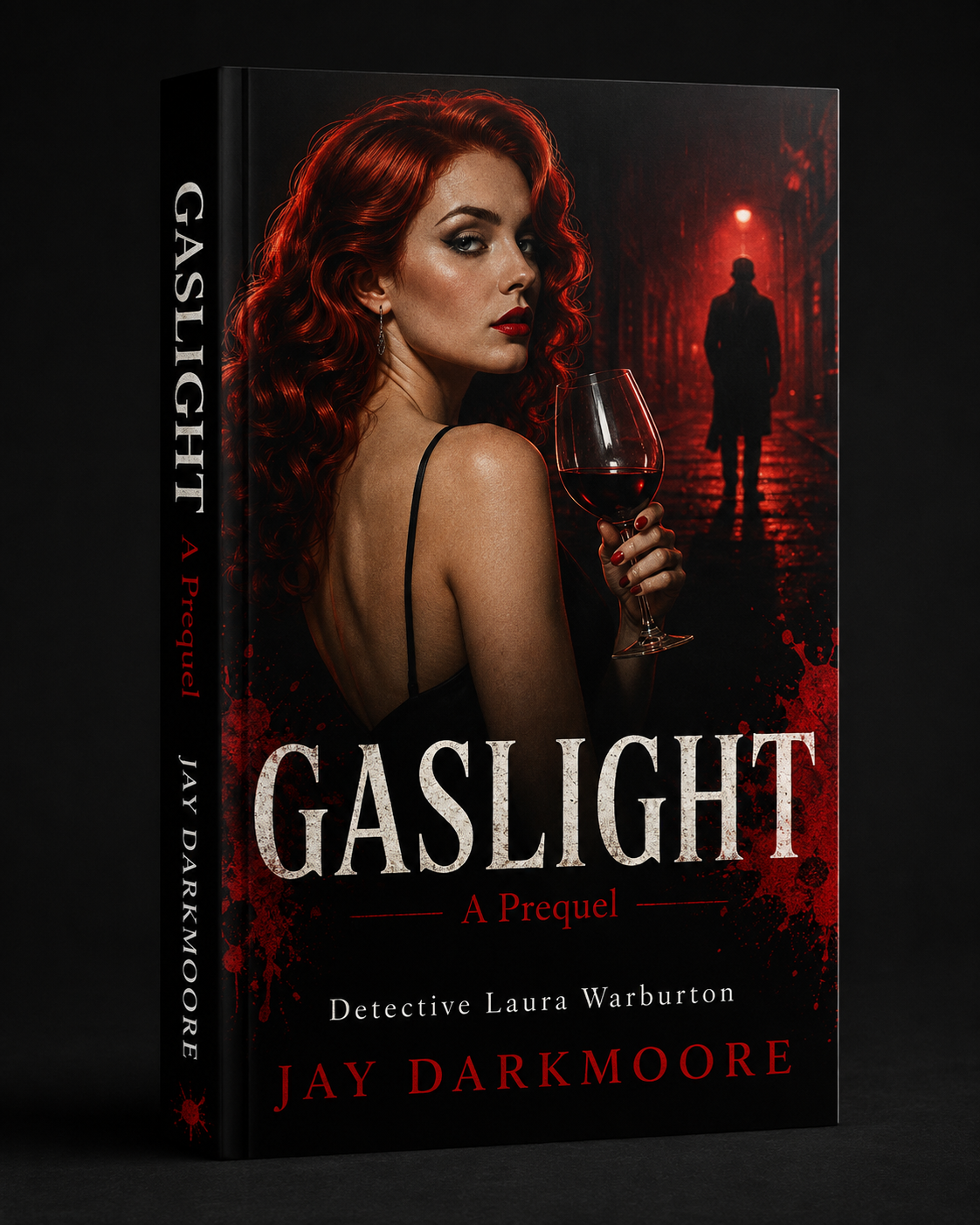
His Detective Laura Warburton series, book one, '‘Left for Dead’ blurb is here -

A new evil. An old nightmare.

As the head of the Major Investigation Team, Detective Inspector Laura Warburton must catch a killer that is preying on vulnerable women. The case strikes dangerously close to home for Laura. Once a victim of domestic violence at the hands of her ex-fiancé, Laura escaped with a shattered reputation, a drinking problem and tormented memories.

With the body count piling up, Laura barely holds herself together as she finds and pieces together the fragmented clues at the crime scenes. Like breadcrumbs, the clues lead her down a dark road to a past she wishes to forget.

Trapped in a deadly game of cat and mouse, is this a new evil in her life? Or is something much more sinister at play?

From best-selling author and ex police officer comes this new nail-biting crime thriller that will leave you guessing until the final page.

Read Jay Darkmoore’s acclaimed ‘The Detective Laura Warburton Series,’ here.


5 - Martina Cole

Martina Cole reigns supreme as the queen of gritty crime fiction, renowned for her compelling narratives set amidst the underworld of London's criminal milieu. With a career spanning over three decades, Cole's novels delve fearlessly into the lives of gangsters, criminals, and those caught in the crossfire. Her raw and unflinching portrayal of urban life captivates readers, drawing them into a world of violence, betrayal, and redemption. From her groundbreaking debut "Dangerous Lady" to her subsequent bestsellers like "The Ladykiller" and "The Take,’ which was adapted for television starring Tom Hardy.

Martina Cole - The Take

Read Martina Cole ‘The Take,’ here.


6 - James Patterson

James Patterson stands as a titan in the world of popular fiction, with an unparalleled ability to captivate readers across genres. With a prolific output spanning crime thrillers, suspense, romance, and young adult fiction, Patterson's novels have dominated bestseller lists worldwide. Known for his fast-paced plots, short chapters, and gripping storytelling, Patterson keeps readers on the edge of their seats from start to finish. His iconic Alex Cross series, featuring the brilliant detective and psychologist, has become a staple of modern crime fiction, spawning numerous adaptations and captivating audiences globally.

James Patterson - Along Came a Spider

Read James Patterson’s ‘Along Came a Spider,’ here.


7 - Peter James

Peter James is a master of suspense and psychological thrillers, known for his gripping narratives and meticulous attention to detail. With his acclaimed Roy Grace series, James has carved out a niche in the crime fiction genre, captivating readers with his complex characters and intricately plotted mysteries. Set in the vibrant backdrop of Brighton, England, James' novels explore the darker side of human nature, delving into themes of obsession, revenge, and the supernatural. Through his vivid storytelling and meticulous research, James creates a sense of palpable tension that keeps readers guessing until the very end.

Peter James - Dead Simple

Read Peter James’ ‘Roy Grace,’ series, here.


8 - Alex Michaelides

Alex Michaelides burst onto the literary scene with his stunning debut novel, "The Silent Patient," captivating readers with its intricate plot and shocking twists. With a background in psychotherapy, Michaelides brings a unique perspective to his psychological thrillers, crafting narratives that delve deep into the complexities of the human mind. "The Silent Patient" follows the gripping tale of Alicia Berenson, a celebrated painter who inexplicably stops speaking after being accused of murdering her husband. Michaelides' skillful storytelling and expertly crafted characters keep readers guessing until the very end, as they unravel the dark secrets hidden within the walls of Alicia's mind.

Alex Michaelides - The Silent Patient

Read Alex Michaelides ‘The Silent Patient,’ here.


*This page may contain Amazon affiliate links. 
Read More
Jay Darkmoore Jay Darkmoore

Interview With Keith C Blackmore

Jay Darkmoore

Keith C Blackmore is a Canadian author with a wide range of titles, from horror and dark fantasy to heroic fiction and post-apocalyptic stories. His following has grown enormously over his career and has recently signed a deal with Podium Publishing to bring his incredible stories to live through audio, which is exactly how I found him.

His acclaimed zombie apocalyptical series ‘Mountain Man,’ has captured not only my heart, but readers around the world, and has been opted for film *fangirl scream*.

Keith is not only an incredibly talented writer, whose stories are not only both terrifying, thrilling and laced with hilarious dark humour and dialogue, but a brilliant and approachable guy, who stands above other authors with his personality, and his willingness to interact with those that follow him.

Although a prolific and very successful author, Kieth likes to keep to the shadows, and doesn’t like to be in the limelight.

As a testament to Keith’s willingness to engage with his readers, he has very kindly taken the time to complete a list of questions that I have been burning to ask him for longer than I would like to admit.

Mountain Man - Book One - By Keith C Blackmore

Keith C Blackmore is a Canadian author with a wide range of titles, from horror and dark fantasy to heroic fiction and post-apocalyptic stories. His following has grown enormously over his career and has recently signed a deal with Podium Publishing to bring his incredible stories to live through audio, which is exactly how I found him.

His acclaimed zombie apocalyptical series ‘Mountain Man,’ has captured not only my heart, but readers around the world, and has been opted for film *fangirl scream*.

Keith is not only a greatly talented writer, whose stories are not only both terrifying, thrilling and laced with hilarious dark humour and dialogue, but a brilliant and approachable guy, who stands above other authors with his personality, and his willingness to interact with those that follow him.

Although a prolific and very successful author, Kieth likes to keep to the shadows, and doesn’t like to be in the limelight.

As a testament to Keith’s willingness to engage with his readers, he has very kindly taken the time to complete a list of questions that I have been burning to ask him for longer than I would like to admit.


JD - Hi Keith, Thank you so much for agreeing to do this 😊 I have only a few questions and I would love to know your answers!

KCB - No sweat, but I hate it already :) (I hate interviews)


Questions -


JD - What did you want to be when you were growing up?

KCB - A movie director.


JD - How did you get into writing, and how did you decided that you wanted to do it as a career?

KCB - When my guidance counsellor tried to hide his smile when said I wanted to be a movie director, I thought “Maybe I should adjust my career goals accordingly…” so…. I thought about writing….


JD - Do you prefer reading a series, or stand-alone novels?

KCB - Both are fine, but I prefer series that are finished. I can binge that way.


JD – When it comes to writing, do you prefer a series or a stand alone?  

KCB - Both are fine, but I think lean towards short series and not long ones.


JD - Kindle, paperback, hardback or audio?

KCB - Kindle, then paperback, if it’s cheap. Hardback is optional. I’m not into audio at all, but I understand the appeal.


JD - How do you see the publishing world changing in the next few years?

KCB - I think audio is booming, but other than that, I don’t see any new formats coming forth. There might be a model in there for writers to write on their sites, and have readers pay what they think is worth either before, during, or at the end. With a minimum dollar amount needed… but it would take a lot of effort on the writer’s part, as well as implementing a system—a third party pay site, I would suspect—to pay the writer for his/her efforts. Probably out there already…?


JD - Who is your inspiration for your work?

KCB - No one at the time of answering this question. I do it because I like it… and thankfully, people like to read/listen to my stories. For now. I figure I’m two bad books away from washing dishes at the local hotel.


JD - In the story ‘The missing Boatman,’ we see personifications of Death, Pain and other emotions and entities. It also raises the question of the importance of Death in the world. What make you come up with that idea? Are you religious?

KCB - Yep, I’m religious. Not overly so, but enough. As for the idea, it’s nothing new. I thought it was original  (ie what if people stopped dying, all at once. How long would it take for people to realize it? What would be the implications? ). However, since putting it out there (and even while it was being published ) I’ve seen four or five tv/movies with the same concept. There’s a back story there as well. I remember, back in the day when I was still submitting, I sent a copy of the manuscript to a literary agent in LA. Never hear a word back from the agent, but a year or so later, I see a tv show and a movie with the same premise. No doubt a coincidence… but still, disappointing.  Like thinking you’re the only kid on the street with a shiny new bike, and the day you roll it out to show the world, another kid rides by on the exact same bike….


JD - What do you think happens when we die?

KCB - I’m not exactly sure, but I know I’ll find out ….one day.


JD - Let’s talk about your career. You have a varied taste in books that you have created, from horror, to heroic fantasy. Why the expansive taste, and what is next for you?

KCB - Grew up reading Science fiction, fantasy, and heroic fantasy,  gradually went into horror, and later on crime fiction… Started reading westerns as my grandfather read them lots. A regular fiction story if something catches my eye. Had a military fiction kick when Tom Clancy was doing them. Later on got into Haruki Murakami (he’s very surreal). It’s good to take a look at different genres, just to see how folks do things. That’s pretty much it. I try and write stories I’d like to read. Sometimes it works, sometimes not….

And next story will be a return to heroic fantasy, or, as I’ve learned, my stuff is more grimdark…


JD - What do you enjoy about writing in specific genres?

KCB - Depends on the genre. Horror fiction I can play with the language a lot more than, say, fantasy.  Never really thought about why I like writing those genres. I’m sure there’s a reason in there somewhere….


JD - Your dialogue and descriptions are both chilling, hilarious and very tongue in cheek at times. How do you come up with them, and how do you choose the dialogue for your characters?

KCB - Everywhere and nowhere. Listening to people talk in the shops, at the bars, anywhere. Even just talking with a friend, some expressions might come up in the spur of the moment that are pure creative lightning…. And when that happens, be sure to have a pen and paper nearby, to write them down and save them for later. Always have a notepad with you….

And, regarding dialogue, this is weird, but I think if you allow your characters to live and breathe and interact,  if you give them something of a personality, and you do it right, they will provide the dialogue themselves. You’ll discover their voices. If that happens, let them talk….  the problem then becomes… knowing when to shut the conversation down.


JD - What do you do when you’re not writing?

KCB - Housework. Running errands. Cooking. Playing PC games. Watching TV or movies. Reading (which I need to be doing more of). Exercising. I like putting together 1000 piece jigsaw puzzles. Sleeping….


JD - What is your favourite line / quote from your books?

KCB - From one of mine? Oh, I don’t know. Can’t think of any….


JD - Do you have any odd writing habits / rituals? 

KCB - Don’t think so….but I’m not that self-aware of my own habits… when writing that is. I do use a timer, to keep track of 20 minute sprints… I write for 20 minutes and then, when the alarm goes off, I’ll get up and move around for about 5 minutes or so. Got that from Chris Fox’s “5000 Words Per Hour”. Great book if you’re looking on ways to increase your productivity.


JD - Do you plot? Pants? Or somewhere in the middle?

KCB - I do have a mental checklist of story points I want to get to, and work towards them, so that is, in essence, plotting, I guess. To a degree.  I do not do any extensive plotting. I usually know what direction I want the story to go, certain points/beats I want to reach, but if a character does something I don’t expect, I’ll let it flow. See where it ends up.

So, somewhere in the middle, I guess.


JD - What goes through your mind when you sit down to a blank page with a word count showing zero?

KCB - The opening scene, and how to best present it, along with any dialogue that might happen. There is no magic. Not really. You sit down and you work at it, and hopefully, it will be fun and flow.  And maybe even crackle a little. In the final stages, the polishing, I’ll go back and read, and if a line comes off blah, I’ll try and infuse some colour in there. Try and get creative. Try… sometimes, that is. Sometimes I’ll leave a plain line as it. There is a danger of becoming too colourful, so striking a balance is important, too.


JD - Do you struggle with writer’s block?

KCB - Yes, at times I do.  I’ll write myself into knots every now and again and it will take some time to get out of them. If that happens, it’s usually because I’ve lost the thread of the story, and a quick read through of everything that has happened before usually unblocks everything.


JD - You can only save one – Pizza or Alcohol. Which do you choose?

KCB - Rough one. They do go so well together. Pizza.


JD - What is your favourite scene that you have written?

KCB - Ah, can’t think of any right now. They are all my babies, but I think the writing is improving with each new book. Better wording, being less wordy, less repetition, etc.


JD - What is your writing process like? What challenges do you face when creating?

KCB - Pretty straightforward. Sit butt in chair and try for at least 2000 words a day. Between 2K and 3K is good. Anything about 4K is great. Some days it happens, and some days… it does not.  The biggest challenge is being just sitting down and consistent, which I have to improve upon. I want to produce more, however, in a day. Upwards of 5k. Even 6 or 7….


JD - What advice do you have writers that are either considering starting writing, or are at the start of their careers?

KCB - Do it, but don’t give up the day job. I will save you that bit of stress. Do not do as I did. Keep your day job and write in the evenings, on weekends, or whenever you can, but be consistent. Sit yourself down and write. Be consistent with your word counts, whatever they may be for the time you give yourself. Make no mistake, it’s work…. It’s a lot of fun, but, yeah, it’s still work. Especially when you get into the editing and polishing….and don’t skimp on that either. Hire a fresh set of eyes, preferably one with a proven track record, to look at your work when it’s time to edit.

And remember, it’s still a good time to be a writer.

There’s a lot more, so much more, but that might be the biggest, most important piece of advice. Nothing else matters if you don’t sit down and write.


JD - To you, what is more important – Plot or characters?

KCB - Characters.


JD - Anything else you would like to add for the reader to enjoy? A favourite quote? Something about yourself? Some words of wisdom?  

KCB - We’re all different, so don’t take everything I’ve said too seriously. If you write, the biggest challenge will be to sit down and actually write. If you can make that part of your day, consistently, you will do well.


If you want to check out some of Keith’s work, here is the link to his website.

Thanks for checking in!


Be sure to join out newsletter so you never miss out on author interviews, as well as getting a free sample of my own work!

Read More
Jay Darkmoore Jay Darkmoore

Trigger Warnings Ruin Books, And This Is Why.

Trigger Warnings Don’t Work and They Ruin Books, And Here Is Why…

Jay Darkmoore


I’m browsing through the bookshelf. See a book I like the look of, flick through the first couple of pages and I am confronted with a page that says ‘Warning, this may contain content that is upsetting for some readers,’ followed by a long shopping list of things that may traumatise me.  

I immediately put that book down, and I don’t touch it again. I don’t being pandered to. I wouldn’t say I like that the writer thinks that I am so unable to handle my own emotions that they must warn me before I take a step into their world.

Dear writer – Do not pander to me. I am not a fucking child. I can handle my own emotions.


But there are more reasons why trigger warnings ruin books than simply the writer feeling that they need to hold my hand and carefully guide me through the pages, just in case I get a little bit sad at the squiggly lines –


1 – The Word ‘Triggered’ Is NOT The Same As Being Upset.

The word triggered comes from psychology. It means to be triggered into a PTSD emotional flashback, to the point where something – an event, like combat and war – happened, and you are transported back to that situation and how you felt at the time. It means that your body reacts and your hormones spike. It means that you begin to shake, to run, to fight. You lose control of yourself because the stimulus has ‘triggered’ significant trauma. It hasn’t just upset or offended you. Being offended is a choice. Remember that. You CHOOSE to be offended and you CHOOSE to be angry.

You do not choose to be triggered. Stop saying being angry is the same as being triggered. They are worlds apart, and it’s very, very disrespectful to actual sufferers of PTSD and trauma to say you got triggered because you read about a bad thing happening that made you feel sad.  


2 – Your Feelings Aren’t My Responsibility

When I write a book, I write the best thing for the story and the characters. Honestly? The reader comes second. The artwork comes first. I write stories that I want to read, and through that I attract likeminded readers. Readers who will then follow me and my work and become true lasting, loyal fans.

If someone reads my work and they do not like it, then fine. I’m not the writer for them. But I couldn’t possibly pander to every possible reader’s wants and needs. It would be impossible. Not to mention that I wouldn’t be being my authentic self. The self that has made my books be downloaded and purchased thousands and thousands of times.

I tell the story that best fits the narrative and the situation for the best book possible. If I started censoring myself, thinking how would this be viewed or perceived, then that wouldn’t be the best result for the book, would it? I would be cheating the art to appeal to a small minority of people, instead of writing the book I wanted to write and giving an authentic experience. If a reader needs a trigger warning, then they probably won’t enjoy my books anyway!

If you read something in a book that is upsetting, and then get angry at the writer for not warning you that such things were going to be in the book, then that sounds like your problem. If two people read the same text, and one gets upset by it, and the other doesn’t, isn’t it the reader that is to blame? Isn’t that the problem of the reader not being able to handle their emotions, rather than the writer for writing it? It’s like getting upset over a joke a comedian makes. We focus in on what upsets us, and then we blame the person that delivered it to us. As the saying goes ‘don’t shoot the messenger.’ Your feelings are no one else’s responsibility to manage other than your own. Get your shit together.

Read the best-selling crime novel ‘Left for Dead,’ by Jay Darkmoore


3 – You’re Confusing Writing About The Bad Thing As The Bad Thing.

If I write a scene about a bad thing happening, someone might think I am condoning it or that that writing about it is exactly the same thing as the bad thing happening. This, frankly, is just fucking ridiculous.


4 – Your Trauma. Your Problem.

If you have trauma, then join the club. Everyone has trauma. Everyone suffers from mental health issues from tome to time. Everyone has something bad that has happened to them in the past. You aren’t special. Your trauma doesn’t make you unique. It makes you just like everyone else.

Therefore, your trauma and your mental health is your responsibility to manage. Not anyone else’s. If you can’t handle reading something that upsets you, then you need to sort that shit out.

The Real Story Behind ‘Left For Dead.’


5 – Life Doesn’t Come With Trigger Warnings

No body is going to warn you before they insult you, attack you or hurt you. No one is going to warn you before a car pulls out in front of you on the motorway. The weather isn’t going to warn you a week before there is an earthquake that destroys your home. So why should a damn book? Its ink on a piece of paper. It isn’t that scary...


6 – You’re Waiting For The Bad Thing to Happen, And It Ruins The Flow and Authenticity Of The Book.

If I am writing a book and I want something a little shocking or uncomfortable to read to help a scene be more impactful, it kind of loses that when I have already warned you about it.

Imagine your partner is going to propose and they set all the flowers, the lights, the music and the most amazing ring, but they showed you the ring first before doing it, just so you weren’t caught off guard (which would be exactly the point in the scenario), then it wouldn’t feel as immersive, would it? If someone warns you about something that happens in the book, it takes away the strong emotion which the writer wants you to have when reading it. It’s basically a spoiler.

Not to mention, you then spend the whole time reading just waiting for the bad thing to happen, meaning that you can’t lose yourself in the book you’re reading.


7 – You Don’t Know How Severe The Trigger Is Going to Be.

If I write a book and I tell you that it involved animal cruelty, then you might think of me gutting an animal and being cruel to it. I may just mean a character pushes a dog down a hill. Both mean things to do. One much more severe.

With a trigger warning, your mind goes to the worst-case scenario, meaning that your guard is then up.


8 – If The Genre Is Known For Upsetting Topics, And You Get Upset, Then You Were Already Warned.

I write thrillers and horror novels. My covers are dark and macabre. From the titles, the covers, and the genre alone, you should know that there is going to be some topics a little close to the bone. If you get blindsided and upset by something you read, then my friend, that’s on you.


8 – THEY DON’T WORK

Research suggests that trigger warning make anxiety to worse due to waiting for the bad thing to happen. You’re waiting to be upset, so you can’t get lost in the story.


So, in conclusion, I think we need to step away from this whole thing of books needing to be censored or the need to have sensitivity readers going over old books so they don’t offend someone. Do you want a safe space, or do you want to be transported to a new world and discover things you never knew possible? Do you want to live in a safe box filled with teddy bears and cotton wool, or do you to actually feel something when you read a book?

And remember. If you read something upsetting, you can always just skip that part, or hell, put the book down and get on with your life.


It’s been a pleasure. If you enjoyed this blog, then why not drop me an email.

jaydarkmoore@gmail.com


-          J

About the author -

Jay Darkmoore is a UK-based author with a background in crime and investigation. He is a huge fan of all things dark - exploring the macabre, demonic and darker aspects of the human psyche.

Jay likes putting his characters in terrible situations and then turning out all the lights. To date, he has self-published novels of horror, crime and dark fantasy dystopia. His inspirations are Stephen King, Keith C Blackmore and Nick Cutter.

When not at his desk, Jay spends his free time making YouTube videos to help writers in their craft, promoting other books he has enjoyed, as well as hitting the gym and taking wild cold plunges with ducks.

He is a single parent to his son Joe who is his biggest fan.

Read More
Jay Darkmoore Jay Darkmoore

The Nine Traits Of Narcissistic Personality Disorder (and Why You Only Need To Know ONE).

Narcissist. What makes someone a narcissist? What traits do they have, and what the only one you need to look out for?

Narcissism is on the rise. That much is clear. So, it’s important that we know how to identify someone quickly who is high in narcissistic traits. Below, I have outlined the nine traits of Narcissistic Personality Disorder, under the acronym SPECIAL ME. Plus, I have included the only reason you should ever truly need to know you’re dealing with a particularly toxic individual.

Remember, you only need to score highly in five of these traits to be classified as having NPD.


S – Sense of Importance.

Does the person you are dealing with believe that they should receive special treatment wherever they go? Do they fly into a rage or into a tantrum quickly when hearing the word ‘No’? If that is the case, you might be dealing with a toxic individual who believes that they are the centre of the universe.


Read ‘A Cult of One,’ by Narcissism expert Richard Grannon.


P – Preoccupation with power, beauty or success.

‘I deserve to be famous!’ ‘I deserve that promotion!’ ‘No, let me post our photos so I know they’re done right, and I look great.’ Sound familiar?

Narcissistic people believe that they are above other people, and that they should get the best in life, regardless of merit or if they have worked for it. It should be awarded to them because they are them. As for beauty, narcissists project the image of perfection to the world, so they must control what others see. An unflattering photograph is a smudge on their mirror, and that simply won’t do.


E – Entitled.

Narcissists believe that they are entitled to have whatever they want, whenever they want it. This means your attention, your money, your sex, and your energy. And when they have sucked you dry and you can no longer give them what they want, they will move onto the next. See also ‘Vampire.’


C – Can only be around people that are important or special.

You know that person who is always sucking up to the boss, or that person who has to be with the cool kids? Yup. It’s for their own self-worth. If they’re around successful people, it’s so that they can feel and appear successful to others.


I – Interpersonally exploitative for their own gain.

Anyone who has dated a narcissist will know exactly what is meant by this. Family. Friends. Co-workers and especially romantic partners will all know that the narcissist must be admired, and that they are highly manipulative for their own gain. They do not see you as another person. They see you as an extension of themselves. As someone who must serve them, or they are erased from their life, and if this supply of love and attention was to criticize the narcissists, then you better be ready or the rage that comes afterwards.


A - Arrogance.

Have you ever told a narcissist, no? Told them that they can’t have or do something that they want to do? Or have you ever shown them that what they are doing is wrong? They twist it so you’re in the wrong. It’s what they do. You cannot tell a narcissist ‘no.’ You cannot make them give a genuine apology, because to apologise or to accept wrongdoing or fault means that they are not perfect, and they cannot and will not admit this.


L - Lack of empathy.

A narcissist doesn’t care that you’re crying or your hurt. It doesn’t benefit them. They cannot feel bad for you. They don’t know what it is. A narcissists heart is a cold rock that barely beats. They show no emotion to others unless it benefits them in some way. They do not care that they cheated on you, lied or stole from you. In their minds, they were justified to do such things, and you are the problem for getting upset over it.


Read ‘Should I Stay or Should I Go,’ by Prof. Ramani Durvasula PhD.


M – Must be admired.

Rinse. Repeat. It’s exhausting.


E – Envious of others, or believes others are envious of them.

If someone has more than them, they want it, hence why they hang around with the high rollers. Or they believe people are envious of them, which is why they gloat and project their success so much.


But the biggest sign that you are dealing with a toxic person is this.

You are reading this article. You are looking online for answers. You are searching on YouTube for narcissism or toxic relationships or something along those lines. Put simply, if everything was okay, then you wouldn’t be so confused.

Listen to that voice in your mind telling you something isn’t right. It’s trying to help you.


Jay Darkmoore is a crime and horror author with a background in crime and investigation, researching topics such as narcissism, coercive control and stalking behaviours.

You can read some of Jay’s work for free by joining his newsletter.

Read More
Jay Darkmoore Jay Darkmoore

Interview with Detective Laura Warburton

Interview with Detective Laura Warburton from Left for Dead by Jay Darkmoore.

Interview with Jay Darkmoore, and the infamous Detective Inspector Laura Warburton, of the Wigtown Major Investigation Team.

JD – Laura.

LW – Jay.

JD – How nice of you to join me tonight at such short notice.

LW – Thank you for having me. I’m sure the world won’t burn down in the time we’re talking.

JD – Let’s hope not. So, first question, how are you?

LW – Breathing.

JD – That’s good.

LW – Depends you look at it. Anymore?

JD – Plenty. A lot of people want to ask you questions. This one is asked by Stacy Night over on Instagram.

LW – You asked your followers for interview questions?

JD – You’re very popular.

LW – I would have done my makeup if I would have known. Or bring Bagpipe.

JD – How is he?

LW – Bagpipe? Just a cat. Does cat things. Sleeps. Eats. Shits. Sounds like a good life to me.

JD – Where did Bagpipe come from?

LW – I got him as a rescue shortly after I moved up North. I needed something to take my mind off the shit that had led to me moving up here in the first place. I was taking out the bins, and I found him in the back of a bush down the side of my house. Heard him meowing. He was so ill, the poor thing. A lot of his fur was missing. He hissed at me when I first picked him up. He was terrified. A little tuna however, he was happy to come inside. He didn’t have a chip, or a collar. I knocked on a few doors and put the word out, but no one came forward. He needed a name. Mittens or socks was too cliché. So, I thought of the most random thing I could think of, and Bagpipe came to mind.

JD – Why Bagpipe?

LW -  Because no matter what you call a cat, it won’t come to you. I found it funny, and the name stuck.

JD – I love that. You’re so kind.

LW – Kind. Desperate for attention. Needing some kind of purpose. Doesn’t matter really. The result is the same, regardless of motivation.

JD  - So back to the question.

LW – Of course. Sorry.

JD – Stacy Night from Instagram. She asked ‘why did you join the police force?’

LW – Fuck. You know, that’s a question I often think about myself!

JD – You’re laughing?

LW – Yeah. I think every cop starts for the same reason – because they want to help people. But we quickly find that when they step into the world of policing, that that quickly changes. You spend a lot of your time dealing with the shit the other agencies can’t be bothered with. Mental health? Call the police. Children that go missing from care? Call the police. My neighbour called me a slut on Facebook. Call the police.

JD – Does that actually happen? The Facebook thing?

LW – More than you know. It’s worrying. I got into trouble once because I had someone call us to report that someone had called them a ‘cunt’ on Facebook, and my response was, ‘are you?’ I was taken off the case at that point.

JD – It boggles the mind.

LW – It does. So, in answer to your question, I joined the job to help people, but with the abundance of terrible managers who get promoted because of how good they are at licking the arse of their superiors, rather than being a good leader, is scarily prevalent. I joined the job, do what I can, and continue to do what I can. Contrary to belief, I am a good supervisor. Much better than the others I have had working over me.

JD – Will you get into trouble for saying things like that?

LW – I couldn’t care less. The more I do this job, the more I see the flaws in the running of it. The core beliefs of the police these days is statistics and pleasing the Home Office. We have forgotten what we are here to do. Help the vulnerable. Put those who commit crimes in prison. Rinse. Repeat. Further to that… stop me if I’m rambling…

JD – No, this is great.

LW – We still do have those core beliefs. Mostly in the cops on the ground who go to the end of the world to help those in desperate need. I admire that. But the fact that bureaucracy gets in the way. It’s upsetting.

JD – This one is closer to the bone. I hope you don’t mind.

LW – Give it to me. I’m not scared.

JD – What was your original job ambition before you entered into a relationship with Ron?

LW - …

JD – Are you okay?

LW – Yeah, sorry. I just... I knew he would come up. I always wanted to lead. To be a detective. I let things get in the way. I always said, ‘don’t shit where you eat,’ and Ron was a prime example of that. He, for want of a better phrase, fucked me up beyond believe. My position in the Met was already eroding.

JD – How so?

LW – Have you spent more than twenty minutes with me?

JD – Seems your heart is in the right place.

LW – It is. But the bosses don’t like it when you tell them to fuck off, you’re busy helping someone and can’t get to the next call that has come through. Anyway. Ron helped my career, that’s true. He was influential. Popular, and vouched for me to get the inspector position. He helped me a lot in that regard. In some fucked up way, I should thank him. Because otherwise I wouldn’t have gotten the position at the MIU. However, him going overboard was one of the reasons I had to leave. Everyone believed I was somehow responsible. That I was the reason he died. I gave up trying to clear my name. Friends and colleagues all trapped under his spell. It was extremely toxic. I heard about what was happening up here, in Wigtown, and I jumped at the opportunity.

JD – And what is happening up here?

LW – No comment.

JD – One last question from Stacy.

LW – I’m going to punch her if it’s about Ron again.

JD – You’ll have to find her first.

LW – That won’t be hard.

JD – Why are you laughing?

LW – Because everyone thinks they can evade the police until we’re breaking down their door at five in the morning. Anyway. Go with the question.

JD – She asked what do you enjoy about your job? That the police see the darkest aspects of humanity and carry on like its nothing. So, what do you enjoy, and what do you hate?

LW – That’s actually a very good question. But first, I would like to clear a misconception. Firstly, the police aren’t machines. We deal with horrific shit all the time, but that doesn’t mean we are immune to it. Drunks fighting in the street. Dead bodies. Burglaries. It’s all in the day to day. We deal with that all the time. Me, anyway. What affects me though, is when we can clearly see that someone is being abused, and they won’t leave the perpetrator. It’s not all black and white, that someone can be abusive, and the other party will up and leave. It’s much more complicated than that. So, when I get repeat calls to an address of a women being abused by their partner, or a man being abused by their girlfriend or wife, then I feel like grabbing them by the shoulders and screaming at them ‘let me help you!’ But it’s so difficult. Which is why when they do finally decide to have faith in us, we have to act on it and give them the best service as possible. So, my answer to that question is the same to each of them. I love helping people, and I love when I can really make a difference in someone’s life. When I can lock that abuser away. Get the victim on courses and therapy to stop them going through it repeatedly. When I manage to really turn someone’s life around. But you must take care of yourself. Police officers can soak up so much hate, so much sadness in a single shift. The adrenaline spikes are insane, and you can be left mentally, physically, and emotionally bereft after a long shift. You must take time to care for yourself. Some go the gym. Get outdoors. Have a bath so hot your skin is peeling off.  Whatever it is. Make sure you take care of yourself. You can’t help the broken if you’re broken too.

JD – And the part you hate?

LW – The part I hate is when you try everything you can, and they still end up dead.

JD – Do you need a minute?

LW – No. Keep going.

JD – Favourite type of alcohol?

LW – The wet kind that comes out of a bottle. But, if I had to choose, it would be red wine. The darker the better. I don’t like how it stains your teeth though.

JD – What would your death row meal be?

LW – I have actually put a lot of thought into this. When your job is to put terrible people in prison, it crosses your mind what would happen if you were in that position. I would have to say a nice steak, medium rare, with thick cut chips, and some steamed asparagus on the side, and a very nice helping of peppercorn sauce.

JD – My mouth is watering. We should grab some of that after this.

LW – I appreciate the offer, but like I said, I don’t shit where I eat.

JD – Noted. Favourite song?

LW – I have a varied taste in music. I like classical. Claud Debussy’s Clair De Lune, or Chopin’s Nocturne number two in Eb Major are favourites of mine. However, I really like metal: Slipknot. Mudvayne. Sleep Token. All that stuff. But my number one song, has to be Perfect by Fairground Attraction.

JD – What is a happy memory of yours?

LW – When I was a girl, around ten, I went to Finland with my mother. We went sledding down a huge snowy hill. About a third down, we came off the sled and rolled in the snow. We laughed the rest of the walk down. It was magic.

JD – Did you meet Father Christmas?

LW – I met someone who was dressed like him. But I when I figured it out, I was told that the real one was busy. Which made sense. He has a lot to do.

JD – What do you want for Christmas?

LW – A good night’s sleep!

JD – You’re laughing again.

LW – The joys of being a cop. The price we pay. We pour more than just our hearts and emotions into our work. We pour our time and energy too. We sacrifice meals, sleep, comfort, birthdays, family events, Christmas’s, New Year. You name it. Halloween is the worst. Somehow someone somewhere thought it was a good idea to arm everyone in the country with explosives and let them all wear masks and set fires, and we wonder why its utter chaos that time of year.

JD – This one is from KBMillion on TikTok.

LW – That’s just for kids dancing, isn’t it?

JD – BookTok is great. Good place to find books. KBMillion has asked ‘do you think serial killers are born, or made that way?’

LW – I don’t think anyone is inherently born evil. Yes, people can be more wicked than others, but I believe it starts in the home. Every killer I have spoken too have all said that it started when they were younger. Yes, some are quicker to falling into darkness than others, but it starts in childhood. Abuse. Poverty. Adverse Childhood Experiences. Even children that have a great life but are spoiled by their parents and get everything they want can become killers. They become entitled. So, no. I don’t believe killers are born. But then again, remove the laws of society, and our true nature comes out. Maybe killers are just living more authentic to our true selves? Maybe their just animals. Maybe their lost souls.

JD – Do you have children?

LW – No. Nor do I want them. As a woman, I have had a lot of shit for that. That I put myself and my career first. Firstly, I need a partner, and being bisexual, I can only procreate with only a select half of who I like to fuck. But my track record with men hasn’t been great. Ron wanted us to have a child. He told me once when we were having a meal. I can’t remember where it was. Italian, I think, but he told me he wanted me to come off my birth control. I said no, which is like throwing petrol on a fire to an abusive person. You’re taking the control from them. He screamed at me, threw my wine over me, and stormed out the restaurant.

JD – That sounds awful.

LW – You say that, and it was. But by that point it had become normal. I was just upset that he picked the wine. It was £15.00 a glass.

JD – You shrug off such things so easily. How?

LW – One thing about domestic abuse is that it becomes part of your every day. It isn’t always like that - violence. Sometimes, if not most of the time, it’s subtle. A comment. A lie. A little gaslighting. Eventually, you just want the argument to happen, because it gets it out the way, and then there’s the happy time after it. So no, I don’t want children, because I don’t ever want to be tied to another person for life. People can change, and it’s good to have an exit strategy. That’s much harder with a child in the middle. A child won’t fix a broken or abusive relationship. It just makes it much, much harder to leave it.

JD – Another TikTok question.

LW – Fuck sake.

JD – This is from Lain Benson. Oh…

LW – Go on.

JD – They have asked ‘what would you do to me, Jay Darkmoore, in a purge scenario.’

LW – Well that depends how fast you can run.

JD – Moving on quickly… Last one  - Terry H TT&B. ‘Where do you see yourself in ten years?’

LW – Alive, if I can help it. Everything else is a bonus.

JD – So we’re nearing the end of this part of the interview. The next part will be for our direct supporters on Patreon, so I have one last question for you, which is, what are we not talking about that we really should be?

LW – The mental health of our emergency workers. And I don’t mean mental health awareness. We’re all aware of it. I mean how shit the mental health of our emergency personnel is, and how the government , for all they say, do not give a fuck. Think about it – if we didn’t have the ambulance, police and the fire service, the fabric that holds society together would rip and tear overnight.

One in three people of the general public in the UK will experience one traumatic event in their lives. A first responder will be exposed to almost four hundred traumatic events in their career. Approximately twenty percent of police officers in the UK exhibit symptoms of PTSD or CPTSD, and a lot of them are unaware of it. Twelve percent of ambulance personnel, and eighteen percent of fire fighters. Just yesterday I had to sign off a detective on sick leave because they had to go through someone’s phone that had committed suicide. The guy hung himself from a tree, and there were messages from his children, six and five, begging him to come home. The detective analysing the phone put on a brave face, but I knew it had shaken him, so I sent him home and put him in touch with occupational health. My superior was only interested in who would take on the cases he had ongoing, which meant I had to put additional strain on the other staff on the team. I am not saying we need to moddy coddle officers. They know the job they signed up for, but the culture of ‘just get on with it,’ is frankly, absurd. Pair that with bosses that wear crowns on their shoulders who are stat hungry to get more Home Office funding, their next promotion regardless of the efficacy or morality of what they’re doing to the officers and the public, all because the government have frankly fucked the system up so badly, meaning public service is impacted, that compounds the distain people have for the police, and the nature of what police officers do, I suspect that statistic is just scraping the barrel. Never had we have more officers leaving the job that was once a career for life. Never have we seen such low morale. Imagine if the police stopped policing. The effects of that would be unthinkable.

JD – Laura, you have given us a lot to think about. If you’re happy, we can have a minute, and then ask you some questions from our supporters?

LW – Can I get a glass of wine?

Patreon only content -

JD – What do you think about prominent celebrities in the world – Andrew Tate, for example…

To read the exclusive answers to the toughest questions, click here.

Read More
Jay Darkmoore Jay Darkmoore

How to make a living writing: The advice you don’t want to hear

Image from Google

If you’re a writer or another creator, you aren’t going to like reading this. This post will piss you off, but I hope it will make you think a little about your direction and goals.

A fellow writer friend emailed me and asked how I manage to stay motivated when writing. How day by day, I write and make progress in my work. How I manage to post consistently. Juggle family life, creativity, health, and business. How I manage to wake up at 5am on days off and get to work day by day.

As if by magic, I heard this saying, to ‘outwork your self-doubt,’ and it hugely resonated with me.
I’m not going to go into imposter syndrome or feeling out of your depth. Those things go without saying.

No. I make a habit of writing. I make it part of my day. My writing is a non-negotiable activity. I must do it, and I have a list of promises I make to myself. A task list to complete that never ends.

Write X amount today. Read this marketing book. Post this content. This call to action. Create this advert. Hit this word count deadline. Complete this edit. I do not break those promises. Because when you can’t trust yourself to get your shit done, then you can’t trust anyone.

Use self-doubt as fuel. It’s the enemy, and you must crush it every time it rears its head. Be hungry for the self-doubt, and then devour it with your successes at the end of the day. Every time I hit the keys on the keyboard. Each time I cross something off my list. Every new email subscriber. Every new story. Every new fan email. It’s all one more millimetre up the mountain.

Keep the promises you make to yourself. No one cares if you fail. Only you.

Writer’s Block Isn’t Real

And only you hold the key to your own success.

-      J


About Jay Darkmoore -

Jay Darkmoore is a UK horror and Dark Fantasy writer. He enjoys the darker and more Macabre sides to story telling, and has a great time doing it.

Starting with his debut Novel in 2020 ‘The Space Between Heaven and Hell,’ a multiple POV thriller mystery novel which delves into the deepest depravities and secrets of the human mind, he has gone on to self publish anthologies and a fantasy sage.

His Podcast ‘The Darkmoore Diaries,’ tackles issues such as mental health, relationships and more ‘human’ elements of life, where as his YouTube channel supports writers in honing their craft.

He has a distinct eye for the unusual, and often can be seen enjoying cold weather in frozen lakes, and is a wellbeing and fitness enthusiast. He is two opposing sides of the same coin. The yin and the yang, the dark and the light, and he has a great time bringing both terror, and comfort into peoples lives.

 
Read More
Jay Darkmoore Jay Darkmoore

How to Write a Psychopath

How to write a psychopath in your book, and why you should.

American Psycho


Psychopaths are incredibly fun to read in books and watch on the big screen and have been popularised by some very infamous and somewhat controversial films and books, from American Psycho written by Bret Easton Ellis, Hannibal Lecter by Thomas Harris and even James Bond by Ian Fleming.

                But why is it that these characters have captured both love and fear in our hearts? What is it about them that makes us want to know more? Is it their propensity to violence? Their ability to be cunning and manipulative without feeling any remorse? Is it their self-confidence and being able to think under pressure? Whatever the reason, our hearts have a soft place in them for psychopaths in literature.

                In this blog, I am going to tell you how to create your very own in your fiction, and it will maybe help you spot these same traits in other characters you enjoy.

Hannibal Lecter

 Traits of a psychopath –

                Most Psychopaths are male, with them making up approx. 1% of the population, and are estimated to make up 50 – 80% of the prison population. Women that show high traits of Psychopathy are more likely to be diagnosed with Borderline Personality Disorder, which along with Psychopathy, is a ‘Cluster B’ personality disorder along with Narcissism and Histrionic Personality Disorder as outlined in the Diagnostical and Statistical Manual Version 5 (DSM – 5 for short) of the American Psychiatric Association.  

                Psychopathy lends itself to having many different traits, all of which are useful in certain situations, and can even benefit those in certain careers (below). Most people can dial these traits down as and when they need them, but a psychopath can’t and would always have these traits on the high setting in their brains.

                These are low empathy, impulsivity, calm under pressure, manipulative, charming, ruthlessness and emotionally detached and show a lack of remorse for their actions.

James Bond

This list can make for some fantastic characters and even make for some fantastic story arcs. Maybe a character is charming and loving, and then later down the line, we see that it was all manipulation to convince someone to give up their life savings, and then abandon them. Tinder Swindler, anyone?

                Or maybe we have a character that is a military soldier, a warrior, who is ruthless and can cut through the enemy without a shred of remorse? A police officer who will do anything to crack the case, or a surgeon who has the steadiest hand to make that vital, life-saving cut with everything on the line?

                Psychopaths make for excellent characters. They make incredibly fun heroes to write about, and add a lot more depth to the ‘bad guy.’ We can look into their childhood, in that a psychopathic person would have normally come from some kind of abusive childhood, and uses psychopathy as a way to navigate the world based off of that. It gives the character more back story. More depth.

Professor Kevin Dutton

According to psychologist Professor Kevin Dutton, most psychopaths are split into two categories. Those with high traits and a low propensity to commit violence, and those with high psychopathic traits and a higher propensity to violence.

                Those that are of lower violent tendencies are more likely to be characterised by high-pressure positions, such as politicians, CEOs, police officers, lawyers and high-end athletes. These could make for some great characters and some side characters, and maybe even a villain or two in there? Maybe the villain is a top businessman of a rival company that is trying to sabotage the hero’s chances at getting their foot on the corporate ladder? Or even a detective that drinks too much and is emotionally vacant when around other people, but is ruthless and driven to catch the bad guy?

Jack Torrance - The Shining

The psychopaths that are high in psychopathic traits with a higher level of predisposition to violence would be our classical villains such as serial killers, a criminal mob boss and even a soldier that has gone rogue.

                Psychopaths make for great foreshadowing opportunities too, as they can be very manipulative. In your story, you can have the psychopath dropping hints and leaving clues for the rest of the characters to find, and then when the big reveal comes later in the book, the reader can connect the dots and have the ‘Oh my god!’ moment that we all love to create when they figure it all out.

Lorna - By Jay Darkmoore

In my dark romance ‘Lorna,’ the main character in the story ‘Christian’ is a psychopath, and he will stop at nothing to not only win the heart of Lorna, his new infatuation but also kill and destroy the lives of anyone that dares stand in his way.

Order it here on kindle unlimited today.

                Psychopaths are so much fun to write and can offer a lot of depth to your characters and the story. Even just highlighting certain traits outlined above and giving them to your characters can make a lot of difference to your writing.

                Have fun with it and thank you for reading.

                But what about other writing ideas? What about being able to break through writer’s block?

Click here to read on.

Read More